For Professional System-Builders
8 Years Systemizing Small Businesses Taught Me to Question This
This post may contain affiliate links which may compensate us at no cost to you. See details here.
Is the Visionary/Integrator framework from EOS Traction actually helping your small business — or putting you in a box? Here's why it might be limiting your team.
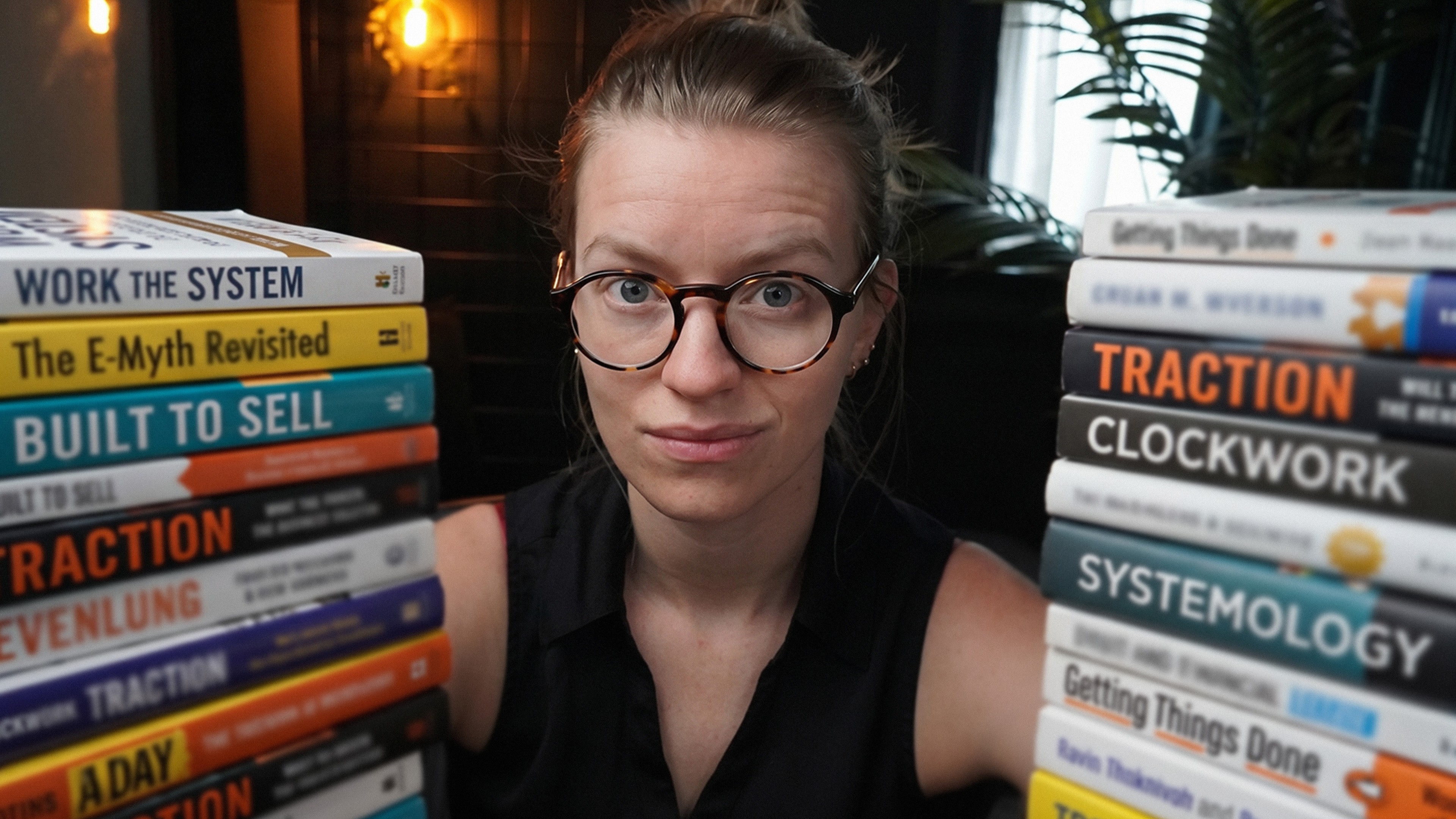
If you've read Traction by Gino Wickman, you've heard of the Visionary/Integrator spectrum. The idea is simple: every business needs a big-picture Visionary and a detail-oriented Integrator, and success comes from balancing the two. It's a popular framework — but after 8+ years of helping thousands of small businesses systemize their operations, I think it's doing more harm than good.
Videos & resources mentioned in this episode:
🔗 Read Traction for yourself
The Problem with Calling Yourself a Visionary (or an Integrator)
Here's what I see happen in the real world: someone reads Traction, recognizes they're bad at follow-through, and concludes they must be a Visionary. What that really means is they've given themselves permission to never build that skill.
The same thing happens in reverse. A detail-oriented, high-achieving person decides they're an Integrator — which they interpret as "I can't be the entrepreneur." So instead of starting the business, they go looking for a Visionary to partner with.
The framework is meant to clarify roles. But in practice, it shrinks people's potential.
Here's the thing: Visionary and Integrator are skill sets, not fixed personality types. Most of the most effective small business operators I know score high on both — and the ones who lean too hard into one label tend to hit a ceiling because of it.
Why Small Business Operators Need Both Skill Sets
For early-career professionals and entry-level employees, skewing toward one end of the spectrum might be fine. But the moment you step into management or entrepreneurship, you need a working understanding of both sides. Locking yourself into one label early on makes it harder to develop into the well-rounded generalist that small team leadership actually demands.
There's also something worth noting about how these two roles are described. The traits associated with Visionary tend to read as traditionally masculine. The traits associated with Integrator tend to read as traditionally feminine. Whether that's intentional or not, it quietly steers people toward roles based on socialization rather than actual strengths — and that's a problem worth talking about.
A Better Way to Think About It: The Operator
Instead of Visionary or Integrator, I use the word Operator — someone who runs the business and makes sure things actually work. Unlike the EOS labels, Operator isn't a brain type or a spectrum. It's a skill. And like any skill, it can be learned.
If the Visionary/Integrator framework works for your team, great — keep using it. But if you've ever looked at those two definitions and thought, "I'm neither," you're not broken. You're probably just a small business operator, and that's exactly what your team needs.
Here's what this video covers:
00:00 Visionary Integrator Framework Explained
00:48 Why the Visionary Integrator Spectrum Is Harmful
02:01 Visionary and Integrator Are Skills Not Personality Types
02:22 The Problem with Labeling Yourself a Visionary
03:34 Small Business Owners Need Both Skill Sets
04:11 Why the Best Operators Score High on Both
05:11 How Gendered Labels Put You in the Wrong Role
05:58 Women in Business and the Visionary Integrator Trap
06:55 What Is a Business Operator
07:13 Anyone Can Learn to Operate a Business
07:29 Is EOS Right for Small Businesses
08:02 Most Small Business Operators Fall in the Middle


IF YOU'RE NOT SURE WHERE TO START, TRY